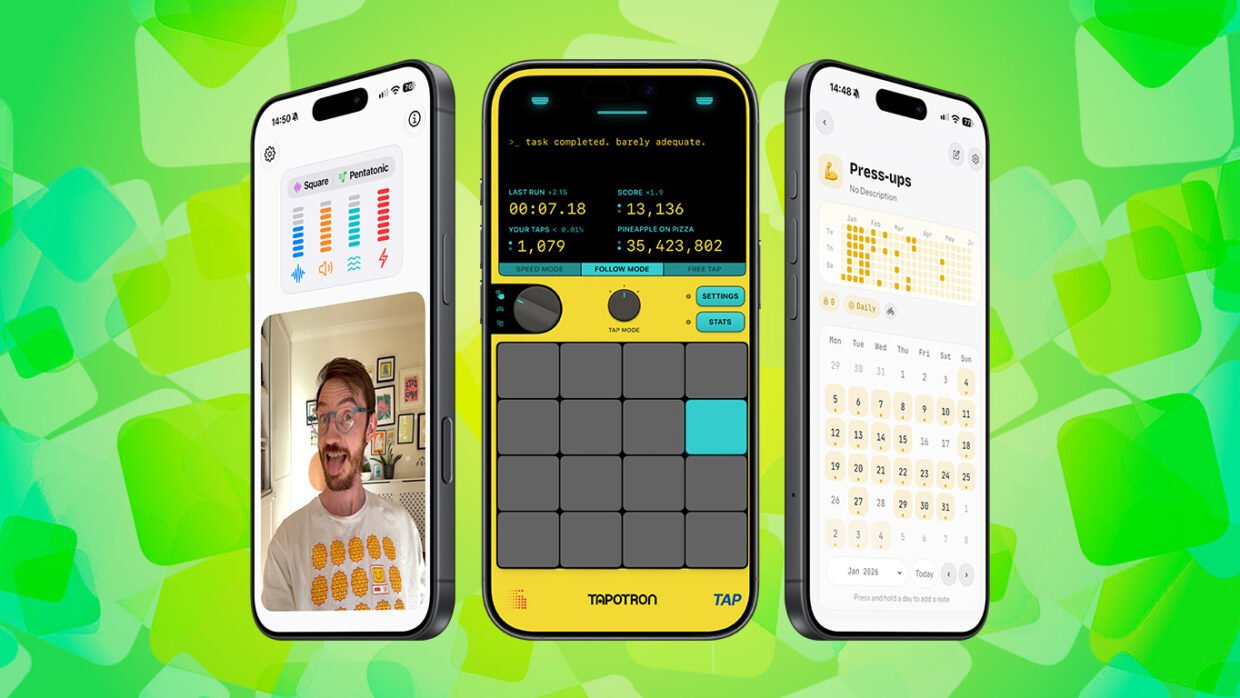

Editor’s note: the showcase has a new home at swipemag.app. Swipe has been writing about apps for more than a decade, but the domain is new, so sharing this page really helps it get found – and helps me keep championing these creators every month. Thanks!
The App Store is home to literal millions of apps, and that number is climbing fast. The average quality may have declined since AI “vibe coding” took off, but there are still thousands of talented developers with cool ideas waiting to be discovered. So each month I dig through the slop to find under-the-radar gems that deserve more attention.
Indie apps are the lifeblood of the App Store. The best are built with love, often to scratch an itch the dev is uniquely obsessed with, and they fill niches bigger studios would never attempt. The weirder, the better: this month’s crop ranges from a face-controlled theremin to an app that tells you whether a wardrobe will fit in your car.
Remember that every app here was made by a real person, often in their spare time, and most have only a handful of reviews. If one catches your eye, show the dev some love with a rating or review on the App Store. Now, without further ado, are my ten faves from the past month.
Winner
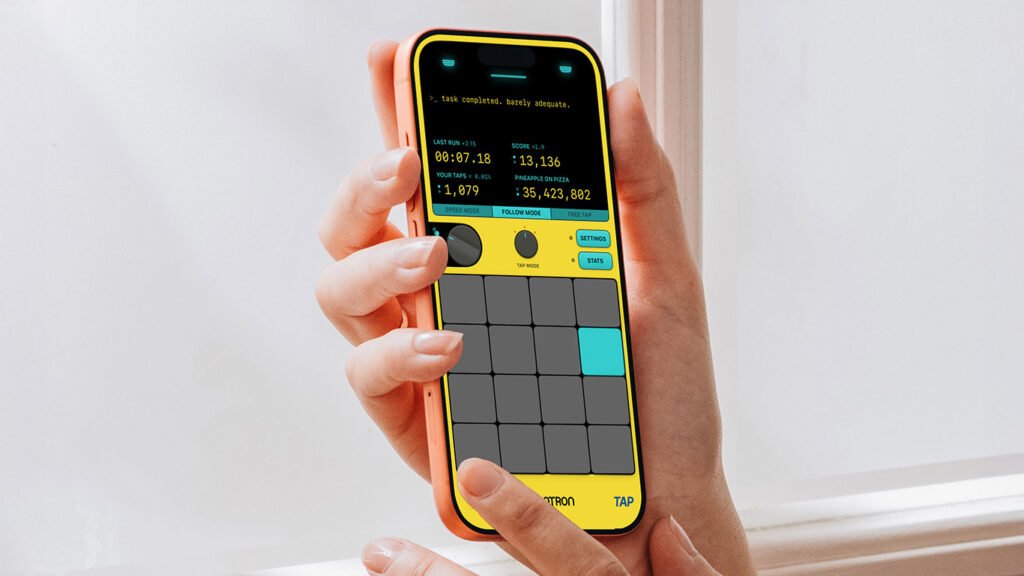
Tapotron (free, with paid add-ons) is part fidget toy, part games console, part loop machine, and all fun. At its heart is a grid of satisfying buttons, narrated by a cheeky robot who turns delightfully snarky in “bad” mode. The recent version 2.0 update is where it really took off: turn the chunky knob to swap between retro minigame cartridges and a loop pad with sounds recorded on a Teenage Engineering OP-1, which you can even scratch like a tiny DJ. Solo dev Daniel Feldt calls it a love letter to the C64s, Nintendos, and old Nokias he grew up with, and it shows. Lovely stuff.
Runners-up
P (free or $5/£5 monthly) is an amusing twist on the water tracker: rather than logging every glass that goes in, you log when it comes back out. Reminders based on your bathroom breaks help you keep on top of your hydration, and logging takes about three seconds from your Apple Watch. It’s all wrapped up in a fun, cheeky package, and you can even nudge friends to drink more water. Solo dev John Ganotis built it in 2016 after a run of dehydration headaches, and a decade on it’s still going strong.
Tube PiP (free or $3/£3 monthly) is a smart way to skip paying for YouTube Premium and still get some of its best perks – ad-free playback, Picture-in-Picture, and lock-screen listening, which is a big help if you use YouTube for podcasts or music while doing something else. There’s a sleep timer too, plus support for Instagram, Twitch, and more, and it can even auto-skip the sponsored reads baked into the videos themselves. A great utility from a two-person team.
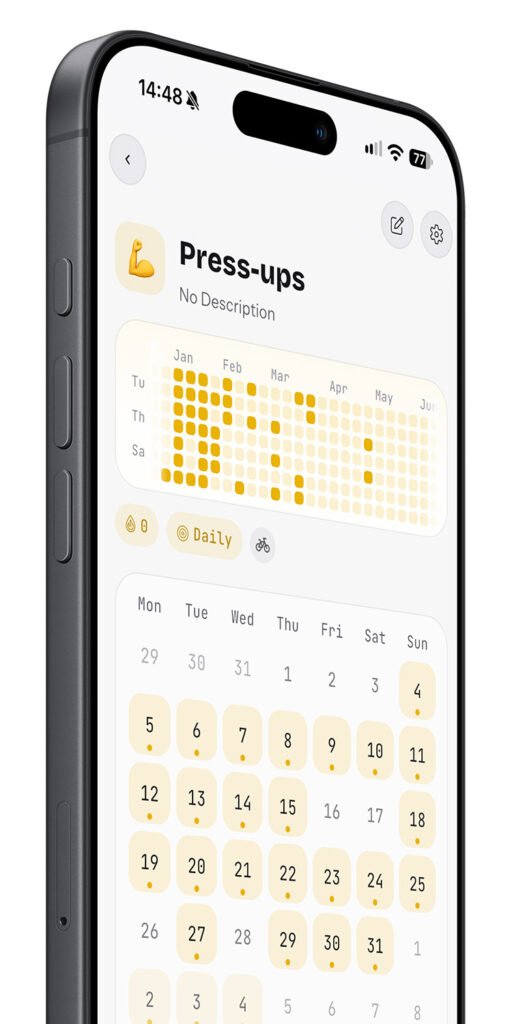
Habit trackers are ten-a-penny, but HabitKit (free or $12/£12 yearly) absolutely nails this minimalist-but-colorful aesthetic and it’s been my go-to habit widget for a couple of years now. Inspired by GitHub’s contribution graph, every habit gets its own grid of tiles – one square per day – so your whole history fits on one screen and you can see at a glance whether you’re keeping it up. There’s no account and it works fully offline, and it can track habits you’re trying to quit as well as ones you’re building.
Media Renamer Pro ($5/£5) might be a little niche, but I really respect a dev who builds a utility to solve a real headache and commits to doing that one thing really well. It cleans up the long, messy filenames in your media libraries – photos, movies, TV, music, audiobooks – reading the metadata inside each file to bring some consistency to your collection. Every rename is previewed before anything changes, a whole batch can be undone with one tap, and it’s refreshingly priced with a single up-front payment.
Will It Trunk? (free) is a unique idea I’ve not seen before: an app that tells you whether a bulky item will fit in your car. Enter the dimensions of that flat-pack wardrobe or Marketplace dresser, and it checks them against your specific vehicle across six loading orientations – so you’ll know not just whether it fits, but which way to load it. It’s an extremely niche idea, but it might just save you a losing Tetris-style battle with your trunk at the store.
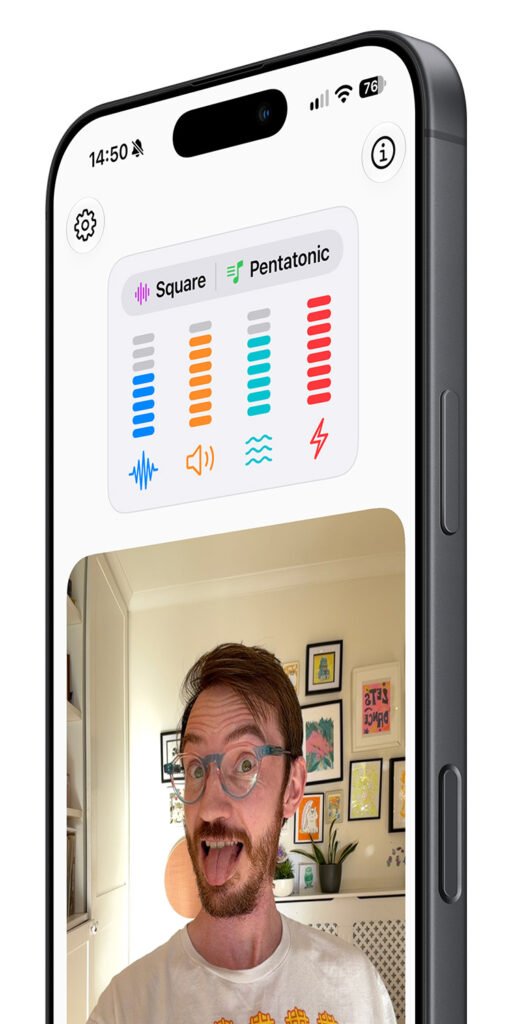
I still remember being blown away by the first virtual theremin apps back when the iPhone 4 was new. Quavery Theremin (free) is a fun spin on the idea, using face tracking via the front camera to control the sound waves: open your mouth to set the pitch, raise your eyebrows for volume, and stick your tongue out for distortion. That means you can give a live performance by pulling faces and wobbling your head around. I raise a lot of eyebrows reading the app pitches in my inbox, but this one was in a good way!
Subby (free or $23/£23 unlock) is a cheaper, offline alternative to other subscription trackers, with no bank login required. You add each subscription yourself in about 20 seconds with help from 600+ brand logos, then Subby reminds you before every charge and shows what everything’s costing you each month and year. Your list stays on your iPhone, the UI is really polished, and as a subscription tracker that isn’t itself a subscription, it could save you a lot of money in the long run.
Battery stats might be a boring topic, but Vizo Battery (free or $4/£4 unlock) goes far beyond Apple’s built-in battery widgets to give you all kinds of handy insights. It logs your charging history, estimates how much time you’ve got left, breaks down consumption hour by hour, flags unusual drain, and even compares your chargers based on recorded sessions. I like that it’s upfront about the difference between what it measures and what it infers, rather than pretending iOS shares more data than it does.
OnlyFlights (free or $20/£20 yearly) is a feature-packed flight tracker from Kate and Alex, a two-person family team who built it after App in the Air shut down. It cross-checks multiple data sources for accurate departure, delay, and gate updates, with alerts from check-in to baggage pickup, Live Activities, friends’ flights, travel stats, and an Apple Watch app. And as its App Store reviews show, when a feature is missing, the devs listen and endeavor to add it in the next update.
More to come
This list is only the tip of the iceberg when it comes to interesting indie apps, and I’ll continue to champion small creators here each month. In the meantime if you’ve built something you’d like to share, feel free to email it over.